
An AI agent can complete the right task in the wrong way. It can use a legitimate tool at the wrong time access unnecessary information repeat an unsafe action or create a risky chain of events across connected systems.
That changes the security problem.
Traditional controls can tell an organization who or what is allowed to access a resource. They do not always explain whether an autonomous agent is using that access in a way that fits its role current task and expected workflow.
As enterprises give AI agents more access to APIs databases knowledge systems and business applications AI agent behavioral security becomes an important layer between simple authorization and full incident response.
Define what normal agent behavior looks like monitor meaningful deviations and establish a response path before an autonomous system receives sensitive production access.
What Is AI Agent Behavioral Security?
AI agent behavioral security is the practice of observing an agent’s activity and comparing it with an approved operating profile.
That profile can include the agent’s identity purpose permitted tools expected data sources normal action frequency approved workflow paths and escalation rules.
The core idea is simple
An authorized action can still be an unsafe action when it happens in the wrong context.
For example, a reporting agent may be authorized to read sales data. That permission does not mean it should suddenly request identity privileges access unrelated employee records or send sensitive data outside the approved environment.
The Security Shift
Move beyond Is this action allowed? and ask Does this action make sense for this agent this task and this moment?
Why Traditional Monitoring Misses Agent Risk
Human users and autonomous agents behave differently. People usually work within recognizable schedules and interaction patterns. Agents can operate continuously make many tool calls in seconds and change their next action based on previous results.
| Security View | Human User | AI Agent |
|---|---|---|
| Activity pattern | Usually predictable | Dynamic and task driven |
| Action speed | Human paced | Machine paced |
| Typical focus | Accounts and resources | Tools, actions, data and workflows |
| Detection challenge | Account compromise | Role deviation and unsafe action chains |
| Required context | User and resource | User, agent, task and workflow |
Behavioral monitoring should therefore complement identity, authorization, data protection and runtime controls rather than replace them.
Organizations already using AI agent observability can build on that visibility by turning activity data into useful behavioral signals.
What Does Dangerous Agent Behavior Look Like?
The goal is not to flag every unusual event. Security teams need to identify deviations that could materially increase risk.
| Behavior Signal | Potential Risk | Response |
|---|---|---|
| Unexpected tool call | Tool misuse or compromised instructions | Alert or block |
| Unusual data access | Sensitive information exposure | Restrict and investigate |
| Repeated failed actions | Looping or attempted bypass | Apply limits and review |
| Privilege request outside role | Privilege abuse | Require human approval |
| Unexpected external communication | Potential data leakage | Block or escalate |
| Abnormal action sequence | Combined actions create new risk | Pause and investigate |
The most important signal may not be a single event. A sequence of normal actions can become risky when they are combined in an unusual order or performed for a purpose outside the agent’s assigned role.
Build a Behavioral Baseline
An organization cannot reliably detect abnormal behavior without defining the normal operating range first.
For every important production agent, document what it is supposed to do and what it should never do. Capture the tools it can use systems it can reach, information it can access and actions that need human approval.
Behavioral Baseline
Agent identity + business purpose + approved tools + expected data access + normal activity + allowed workflow paths + escalation thresholds
Clear identity is especially important because security teams need to connect every action to the correct agent. Enterprises should strengthen AI agent authentication so monitoring systems can establish trustworthy attribution.
Why Context Matters
A useful behavioral system needs more than raw logs. It needs context.
The same action can have different risk levels depending on the task. A finance agent accessing a reporting database during a scheduled close may be normal. The same access from a customer-support agent may deserve immediate review.
- What task is the agent performing?
- Which user initiated the task?
- What data is involved?
- Which tool is being used?
- What happened immediately before the action?
- Was human approval required?
- Can the action be reversed?
OWASP’s AI Agent Security guidance recommends monitoring agent decisions and tool calls, using anomaly detection, maintaining audit trails and watching for abnormal tool usage and privilege behavior Read the OWASP AI Agent Security guidance.
Behavior Monitoring Needs Least Privilege
Detection works best when it is paired with limited permissions.
If an agent can access every system in the environment, a behavioral alert may arrive only after the potential blast radius has become large. Least privilege reduces that exposure by limiting the actions available to the agent.
Give an agent only the permissions required for its assigned job. Use behavioral monitoring to detect activity that still falls outside the expected pattern.
This makes AI agent privilege an important part of the same security model.
What Should Happen When an Agent Goes Off Track?
Detection is not enough. Enterprises need a predefined response path.
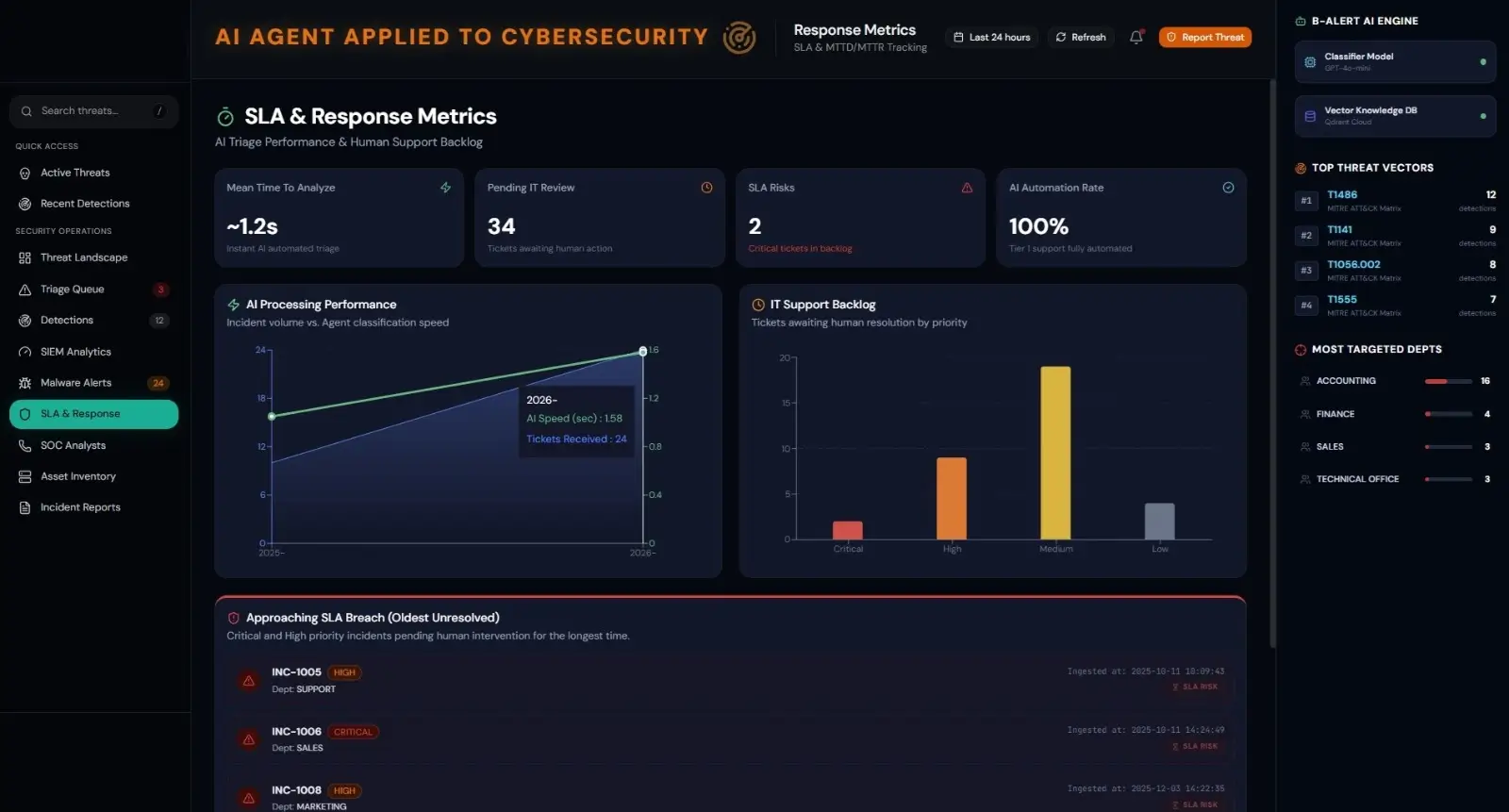
Defining this response before deployment turns behavioral monitoring into an operational control instead of another dashboard that nobody checks during a crisis.
Behavioral Security and Runtime Protection
Behavior monitoring is strongest when it works as part of a layered architecture.
| Layer | Purpose |
|---|---|
| Authentication | Establish trusted agent identity |
| Authorization | Limit systems, tools and data |
| Runtime security | Enforce policies during execution |
| Behavior monitoring | Identify abnormal actions and sequences |
| Incident response | Contain, investigate and recover |
Enterprises building AI agent runtime security can use behavioral signals to strengthen protection while agents are actively operating.
How to Detect AI Agent Anomalies
A practical detection model can combine several signals instead of relying on one simple rule.
| Signal | Example | What It Can Reveal |
|---|---|---|
| Frequency | Sudden spike in tool calls | Loops or misuse |
| Scope | Access outside normal datasets | Privilege deviation |
| Sequence | Data access followed by an unusual export | Potential data leakage |
| Outcome | Repeated failed transactions | Execution problems or manipulation |
| Context | Action conflicts with assigned task | Role deviation |
Organizations can extend their existing AI agent evaluation programs by testing how agents behave under abnormal instructions, unexpected tool responses and unusual workflow conditions.
Common Mistakes to Avoid
Monitoring Only the Model
The security surface includes tools APIs, memory, permissions and downstream systems. Model output alone is not enough.
Creating Too Many Alerts
If everything becomes an alert important signals disappear in the noise. Focus on deviations that are meaningful and actionable.
Ignoring Action Chains
Several individually valid actions can create an unsafe outcome when combined.
Leaving Ownership Unclear
Every production agent needs a responsible owner who can investigate and respond to abnormal behavior.
Failing to Learn From Incidents
A security event should improve controls. Otherwise the same weakness can return through another agent or workflow.
Before Production Access
Define the agent’s normal behavior approved boundaries, escalation thresholds and emergency controls before giving it meaningful access to enterprise systems.
A Practical Implementation Roadmap
Prioritize agents with sensitive data access, write permissions or high autonomy.
Document expected tools systems, data sources, action frequency and workflow paths.
Capture tool calls access events, decisions and meaningful outcomes.
Create thresholds for unusual access action frequency, sequence and privilege use.
Run realistic scenarios and verify that risky behavior can be contained quickly.
Use incidents and evaluation results to refine policies, permissions and detection logic.
Final Thoughts
AI agent behavioral security is ultimately about maintaining control as autonomous systems become more capable.
The strongest enterprise model combines trusted identity least privilege, runtime protection, observability, behavioral detection and a clear response process.
As agents gain access to more tools and business systems security teams should monitor more than whether an action is technically permitted. They should understand whether the action fits the agent’s role the current task and the expected workflow.
That is how enterprises can scale autonomous AI without turning greater autonomy into uncontrolled risk.
Frequently Asked Questions
What is AI agent behavioral security?
It is the monitoring of an AI agent’s actions tool usage, data access and behavior patterns to identify activity that falls outside its approved role or normal operating profile.
Why is behavior monitoring important for AI agents?
Agents can operate continuously and perform multiple actions across connected systems. Behavioral monitoring helps identify deviations that simple access controls may not detect.
What should enterprises monitor?
Monitor tool calls data access, action frequency, privilege use, workflow sequences, approvals and unusual outcomes.
Can behavioral security replace traditional cybersecurity?
No. Authentication authorization, data protection and runtime controls remain necessary. Behavioral security adds a specialized monitoring layer for autonomous activity.
How should enterprises start?
Begin with high risk agents define their normal behavior, limit permissions, capture relevant activity and establish a clear response path for significant deviations.