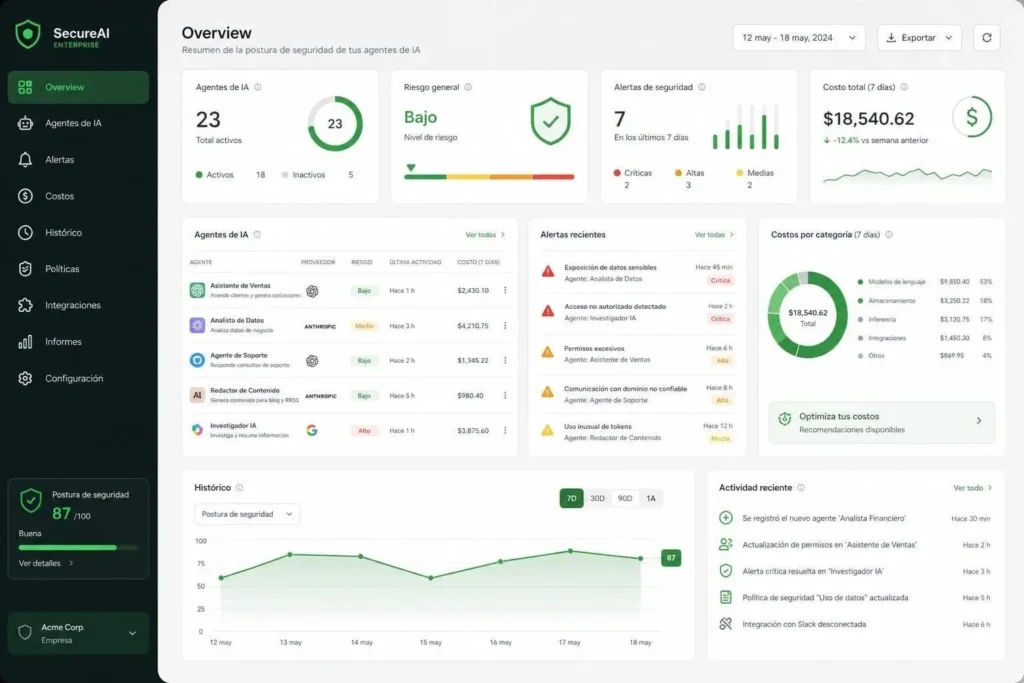

Your company may already have more AI agents than your IT team realizes.One department builds an agent for reporting. Another creates one for customer support. A third adds agents to a CRM or service platform. Individual projects may look useful, yet the enterprise can slowly end up with duplicate capabilities, unclear ownership, overlapping permissions and costs spread across different budgets.
This is the problem behind AI agent sprawl.
The risk is not simply having too many agents. The deeper problem is losing visibility into what those agents can access, which systems they can change, who owns them and whether several agents are performing the same work.
That challenge is becoming more urgent as enterprises expand agentic AI. Gartner predicts that the average Fortune 500 enterprise could have more than 150,000 agents in use by 2028, up from fewer than 15 in 2025. Gartner also reported that only 13% of organizations believe they have the right agent governance in place. Gartner’s 2026 research on AI agent sprawl highlights governance and centralized inventory as key responses.
Do not try to stop every employee from creating AI agents. Build visibility first, centralize inventory, define ownership, control permissions and retire agents that no longer create measurable value.
What Is AI Agent Sprawl?
AI agent sprawl is the uncontrolled growth of AI agents across an organization without enough visibility, coordination or governance.
It can happen even when every individual team has a reasonable reason for deploying an agent. The problem appears when those local decisions accumulate.
| Early Signal | What It Can Become | Business Risk |
|---|---|---|
| Multiple teams build similar agents | Duplicate capabilities | Unnecessary cost and maintenance |
| Agents use separate credentials | Credential proliferation | Security exposure |
| No central inventory | Unknown or shadow agents | Loss of visibility |
| Different teams apply different policies | Inconsistent governance | Compliance gaps |
| Agents change shared systems | Conflicting actions | Operational disruption |
The important point is that sprawl is usually an organizational problem before it becomes a technical one. Teams need enough freedom to experiment, but the enterprise also needs a way to see what has been deployed and understand its impact.
Why Agent Sprawl Is Becoming a 2027 Enterprise Problem
AI agents are becoming easier to create and deploy. Many business platforms now include agent-building capabilities, which means the barrier to launching another agent is much lower than it was a few years ago.
IBM reported in 2026 that 70% of surveyed executives said teams across their businesses were deploying technology faster than IT could track it. The same research found that only 11% of respondents felt completely prepared for the scale of AI agent deployment. IBM’s 2026 enterprise AI control research shows why visibility is becoming a leadership issue rather than just an IT task.
The 2027 Problem
The challenge will not simply be building AI agents. It will be knowing which agents exist, why they exist, what they can access, what they cost and whether the enterprise still needs them.
What Makes AI Agent Sprawl Dangerous?
Duplicate Agents
Different teams may build agents that solve nearly the same problem. Each one carries its own maintenance, evaluation and security requirements.
Hidden Permissions
An agent may have access to systems that its current business task does not require. As the number of agents grows, reviewing those permissions becomes harder.
Fragmented Costs
An individual department may see an acceptable monthly bill while the enterprise as a whole is spending heavily across dozens or hundreds of AI systems.
Organizations can connect this problem with their existing AI agent cost optimization strategy to identify unused capabilities, duplicated services and unnecessary consumption.
Conflicting Actions
Two agents can independently make reasonable decisions that create a poor result when they operate on the same system or business record without coordination.
Shadow AI
Employees who cannot access approved tools may create or adopt unsanctioned alternatives. Gartner has warned that simply blocking agent use can push employees toward shadow AI, which can create greater risk because IT loses visibility.
The First Step: Build an Enterprise Agent Inventory
You cannot govern what you cannot see.
An enterprise agent inventory should provide a single source of truth for the agents operating across departments and platforms.
Minimum Agent Record
Agent name + owner + purpose + business unit + tools + data access + permissions + environment + cost + risk level + deployment status + last review
The inventory should include both sanctioned agents and agents discovered outside approved channels. That distinction matters because the riskiest system may be one the central IT team does not know exists.
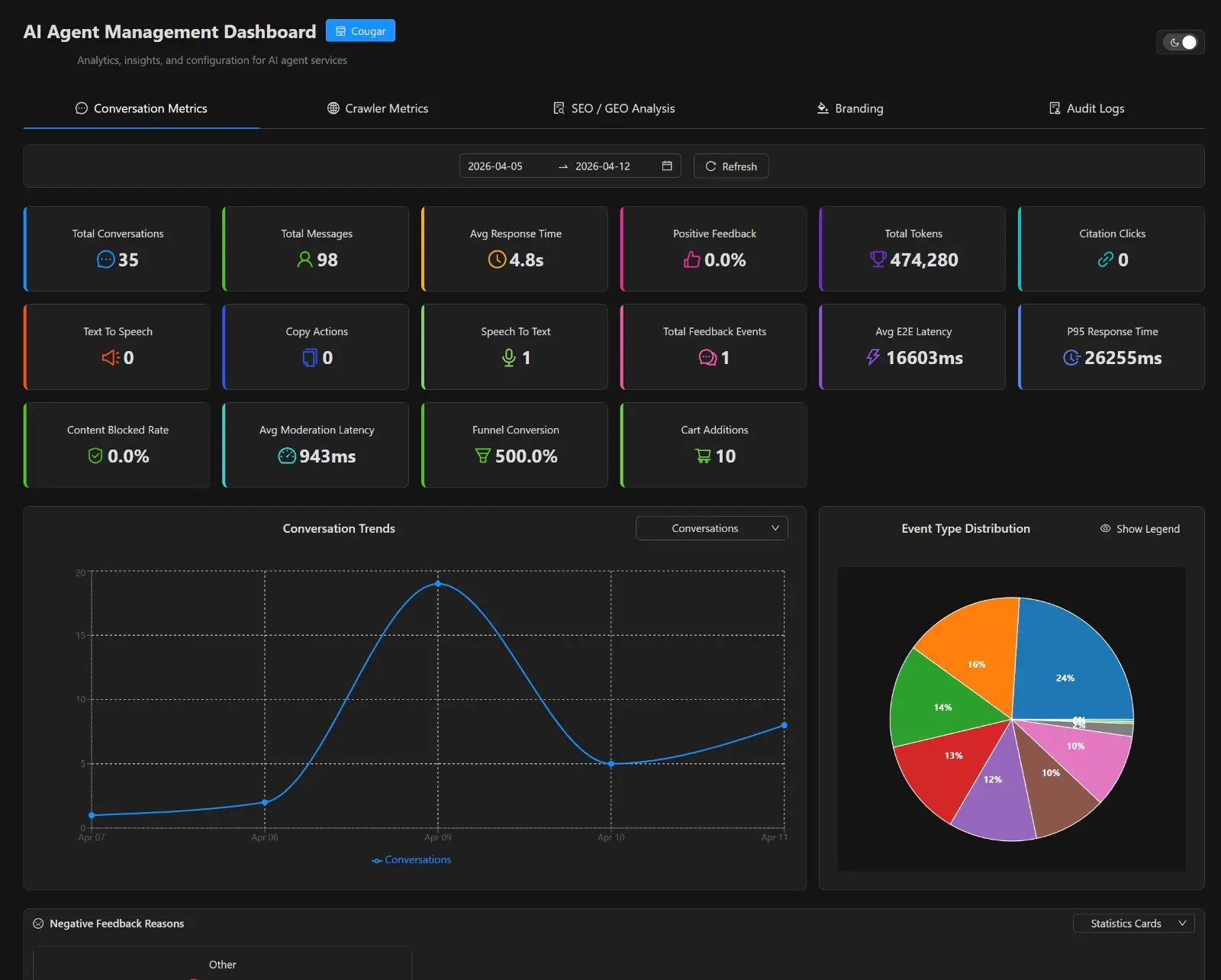
Companies already using AI agent observability can use existing activity data to improve discovery and ongoing inventory management.
Classify Agents by Risk and Autonomy
Not every agent deserves the same level of control.
A low-risk assistant that summarizes approved internal documents should not face exactly the same governance process as an agent that can approve payments or modify customer records.
| Agent Type | Typical Risk | Recommended Control |
|---|---|---|
| Read-only assistant | Low | Standard monitoring |
| Workflow assistant | Medium | Defined permissions and review |
| Action-taking agent | High | Strong runtime controls and approval |
| Privileged agent | Very high | Strict identity, least privilege and continuous monitoring |
| Multi-system autonomous agent | Very high | Central governance and detailed auditability |
This risk-based model prevents governance from becoming either too weak or too restrictive.
For higher-risk deployments, enterprise AI governance can provide the broader policy structure around ownership, controls, approvals and accountability.
Control Permissions Before the Agent Count Explodes
Agent inventory tells you what exists. Permission management tells you what each system can actually do.
Every agent should receive the minimum access required for its assigned role. Shared credentials should be avoided where possible, and sensitive actions should have clear approval requirements.
If an enterprise cannot quickly answer “What can this agent access?” and “Who approved that access?” the agent should not be treated as production-ready.
Your existing AI agent privilege coverage fits naturally into this stage because permission growth can become one of the hardest parts of managing a large agent ecosystem.
How to Reduce Agent Sprawl Without Killing Innovation
A common mistake is responding to sprawl by banning agent creation completely.
That can slow legitimate innovation while encouraging employees to work around central controls.
A better model is controlled freedom.
| Instead of | Use |
|---|---|
| Block all employee-built agents | Approved agent development paths |
| Allow unlimited agent creation | Registration and ownership requirements |
| Review every agent equally | Risk-based governance |
| Keep agents forever | Regular review and retirement |
| Govern each business unit separately | Shared enterprise policies with local accountability |
A coordinated approach lets teams move quickly without allowing the enterprise AI environment to become invisible or fragmented.
Retirement Is Part of Agent Management
Organizations often think about how to create and deploy agents but not how to remove them.
An agent may become redundant after a platform introduces the same capability. Another may stop delivering enough value to justify its maintenance cost. Some may belong to projects that have already ended.
Create → Approve → Deploy → Monitor → Review → Improve or Retire
Every production agent should have a review date and an accountable owner. Retirement should be treated as a normal lifecycle decision rather than a failure.
A Practical 2027 Agent Sprawl Control Plan
Find agents across sanctioned platforms, business applications and shadow environments.
Record ownership, purpose, tools, data access, permissions, cost and risk.
Group agents by autonomy, sensitivity and business impact.
Apply policies that match the agent’s actual risk instead of using one rule for everything.
Track behavior, cost, permissions, performance and important system changes.
Merge duplicates, remove abandoned agents and reduce unnecessary access.
Track whether the agent portfolio is improving business outcomes without creating uncontrolled risk.
What Leaders Should Measure
| Metric | Why It Matters |
|---|---|
| Total active agents | Shows portfolio growth |
| Agents with known owners | Measures accountability |
| Duplicate agents | Reveals unnecessary complexity |
| Agents with privileged access | Shows security exposure |
| Monthly agent cost | Measures financial impact |
| Retired agents | Shows lifecycle discipline |
IBM’s 2026 research argues that organizations need oversight that can keep pace with agentic systems because the speed of agent deployment can exceed conventional manual governance processes.
Final Thoughts
The goal is not fewer AI agents.
The goal is a portfolio of agents that the enterprise can see, understand, secure, measure and control.
AI agent sprawl will become harder to manage as agents become cheaper to create and more deeply integrated into business software. The organizations that wait until hundreds or thousands of agents are already operating will face a much harder cleanup problem.
The practical answer is to establish an agent inventory early, assign ownership, classify risk, control permissions, monitor activity and retire agents that no longer justify their cost or complexity.
By 2027, mature enterprises will not ask how many AI agents they have. They will ask whether every agent has a clear purpose, a measurable outcome and an accountable owner.
Frequently Asked Questions
What is AI agent sprawl?
AI agent sprawl is the uncontrolled growth of AI agents across an organization without sufficient visibility, ownership, coordination and governance.
Why is AI agent sprawl a security risk?
Large agent portfolios can create duplicated capabilities, excessive permissions, credential growth, unknown systems and conflicting actions across shared business platforms.
How can enterprises control AI agent sprawl?
Build a centralized inventory, assign ownership, classify agents by risk, limit permissions, monitor activity, review costs and retire agents that no longer provide value.
Should companies ban employees from creating AI agents?
Usually not. A controlled development model with approved platforms, registration, ownership and risk-based governance can preserve innovation while improving visibility.
What should be included in an AI agent inventory?
At minimum, record the agent’s owner, purpose, business unit, tools, data access, permissions, environment, cost, risk level, status and review date.