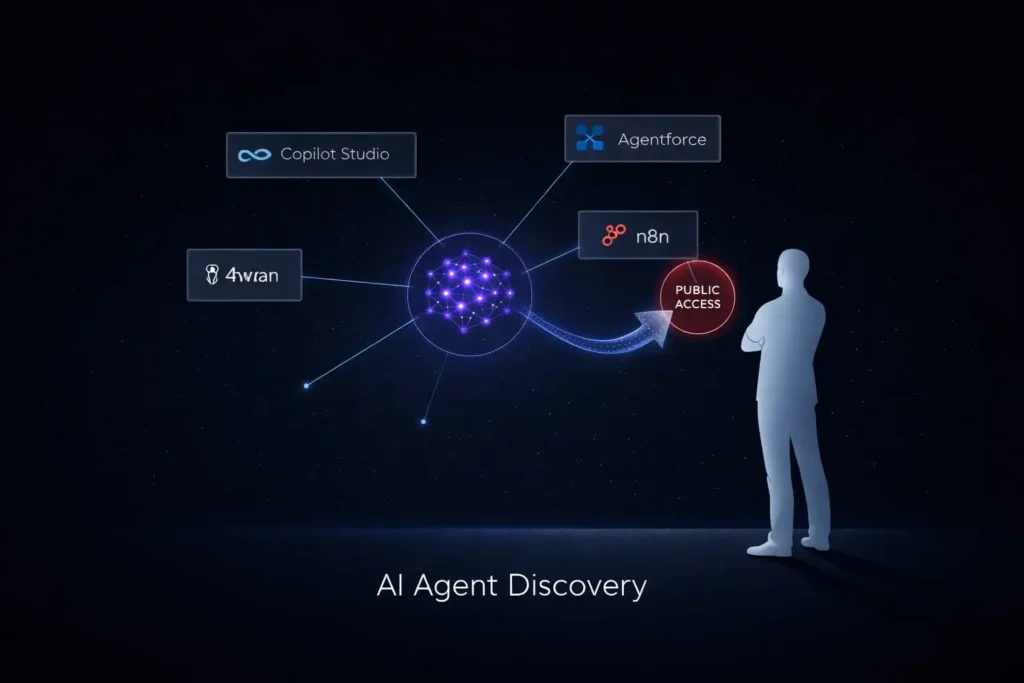

Shadow AI agents may be running inside your company without your security team knowing they exist.Your security team may know which AI tools employees use. That does not mean it knows which AI agents are actually acting inside the company.
That distinction is becoming important as AI moves from simple assistance into autonomous work. An agent can call an API access internal data update a record run a workflow or make a decision on behalf of a user.
When that agent exists outside the company’s approved inventory and governance process it becomes a shadow AI agent.
Critical Risk
An unmanaged agent can have an unknown owner unnecessary permissions and access to business systems that security teams never reviewed.
Cloud Security Alliance research published in April 2026 found that 82% of organizations had discovered at least one previously unknown AI agent or autonomous workflow. The same research found that 65% had experienced an AI agent related incident during the prior year. Cloud Security Alliance research on unknown AI agents.
Executive Takeaway
The first task is discovery. An enterprise cannot govern or secure an AI agent that it does not know exists.
What Are Shadow AI Agents?
Shadow AI agents are autonomous AI systems or workflows operating without proper enterprise approval, ownership or security oversight.
They can appear inside SaaS platforms, developer tools, workflow builders, LLM platforms and custom business automation.
Why Agents Create More Risk
A basic AI tool may provide information. An AI agent can use that information to take action across connected systems.
That ability changes the security surface. An unmanaged agent can keep credentials, access data and interact with business systems long after the original employee task is finished.
Where Shadow AI Agents Usually Appear
Shadow deployments often begin with a legitimate business need. The problem appears when experimentation moves faster than enterprise discovery and governance.
| Environment | Typical Example | Primary Risk |
|---|---|---|
| Internal automation | Workflow or scripting agent | Hidden credentials |
| Developer tools | Coding or deployment agent | Code and infrastructure access |
| SaaS platforms | Embedded autonomous workflow | Data and integration exposure |
| LLM platforms | Custom agent or plugin | Unreviewed connections |
| Employee devices | Local autonomous tool | Low visibility |
Cloud Security Alliance findings show that unknown agents commonly emerge from internal automation and scripting environments followed by LLM platforms and SaaS tools with built in automation.
Why Normal Asset Inventories Miss Them
Traditional inventories track applications, devices, cloud resources and users. An agent can live inside an approved application while creating its own tools, permissions and data paths.
| Missing Information | Business Problem | First Decision |
|---|---|---|
| Owner | No clear accountability | Escalate |
| Credentials | Access may remain active | Review |
| Connected tools | Attack surface is unclear | Investigate |
| Business purpose | Agent may outlive its project | Review |
| Activity | Risky actions may stay hidden | Monitor |
Microsoft’s AI agent discovery capability provides network level visibility into managed and shadow agents and can attribute activity to the user, device and process involved. Microsoft AI agent discovery documentation.
If an agent is missing from the inventory, security decisions are being made with incomplete information.
How to Discover Shadow AI Agents
A strong discovery program combines several sources of evidence.
This is where AI agent observability becomes valuable because activity data can connect agents with tools, actions and outcomes.
How to Assess Shadow Agent Risk
Not every unknown agent is equally dangerous. Risk should reflect autonomy, data sensitivity, permissions and business impact.
| Risk Signal | Example | Priority |
|---|---|---|
| High autonomy | Acts without approval | Critical |
| Sensitive data | Financial or confidential records | Critical |
| Privileged access | Admin or write permissions | High |
| External communication | Can send data outside the company | Medium to High |
| Read only access | Limited internal information | Lower |
After discovery, reduce unnecessary access. AI agent privilege controls can limit what an agent can reach and reduce the potential blast radius.
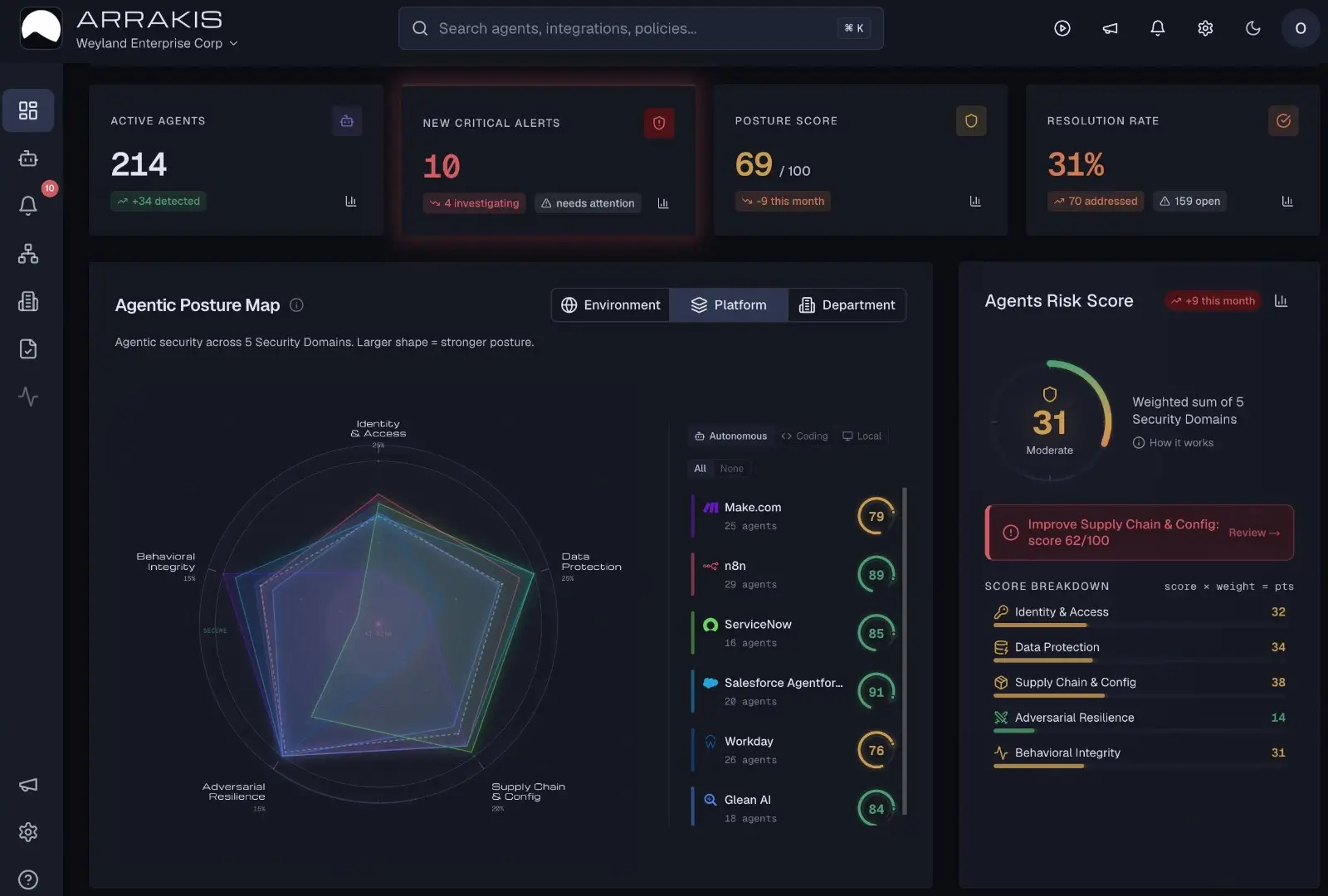
What Should Happen After Discovery?
| Finding | Recommended Decision |
|---|---|
| Useful and low risk | Register and monitor |
| Useful but high risk | Govern and restrict |
| Duplicate capability | Consolidate |
| No clear owner | Assign ownership |
| Unsafe or unauthorized | Contain and investigate |
A blanket ban can push useful AI activity further underground. A simple registration path gives teams a safer way to bring valuable agents into the official environment.
Give Every Approved Agent a Clear Identity
Once an agent is accepted into production, it should have a documented identity and accountable owner.
Owner + purpose + platform + tools + data access + permissions + risk + cost + review date
AI agent authentication strengthens this stage by helping security teams connect actions to the correct agent and identity.
Monitor Agents After Approval
Approval is not the end of security. An agent can change when a team adds a new tool, permission, data source or workflow.
Monitor meaningful signals such as unusual tool calls, sensitive data access, privilege changes, repeated failures and unexpected external communication.
This is where AI agent behavioral security adds a second layer. Discovery tells you what exists while behavioral monitoring helps determine whether the agent continues operating within expected boundaries.
Review an approved agent whenever its permissions, tools, purpose or autonomy materially changes.
Retire Agents Before They Become Security Debt
An agent created for a short project can keep its credentials and permissions long after the business need disappears.
Cloud Security Alliance research found that only 21% of surveyed organizations had formal AI agent decommissioning processes.
Discover → Assess → Register → Secure → Monitor → Review → Retire
Retirement should remove the agent as well as credentials, permissions and integrations that no longer have a business purpose.
How Enterprises Can Stay Ahead
Shadow AI is often a sign that adoption is moving faster than governance. The answer is not to choose between innovation and control.
The Strategic Goal
Do not aim for zero AI agents. Aim for zero important agents that the enterprise cannot identify, understand and control.
This also supports the wider effort to manage AI agent sprawl as more teams deploy autonomous systems.
Final Thoughts
Shadow AI agents are a visibility problem before they become a security incident.
The practical response is to discover unmanaged agents early, establish ownership, understand access, apply risk based controls and monitor production activity.
When enterprises know what is running, who owns it what it can reach and when it should be retired, autonomous AI becomes much easier to scale safely.
The goal is not less AI. The goal is AI that the organization can actually see and control.
Frequently Asked Questions
What are shadow AI agents?
They are autonomous AI systems or workflows operating without proper enterprise approval, ownership or governance.
Why are shadow AI agents risky?
They may use unknown credentials, access sensitive data or perform actions outside normal security oversight.
How can companies discover them?
Use endpoint visibility, network monitoring, identity records, SaaS reviews and an enterprise agent inventory.
Should every unknown agent be blocked?
No. Useful low risk agents can be registered and governed while unsafe agents can be contained or retired.
What should an enterprise track?
Track owner, purpose, tools, data access, permissions, risk, cost, status and review date.